
Resources
The Ultimate N8N AI Agents Guide
by
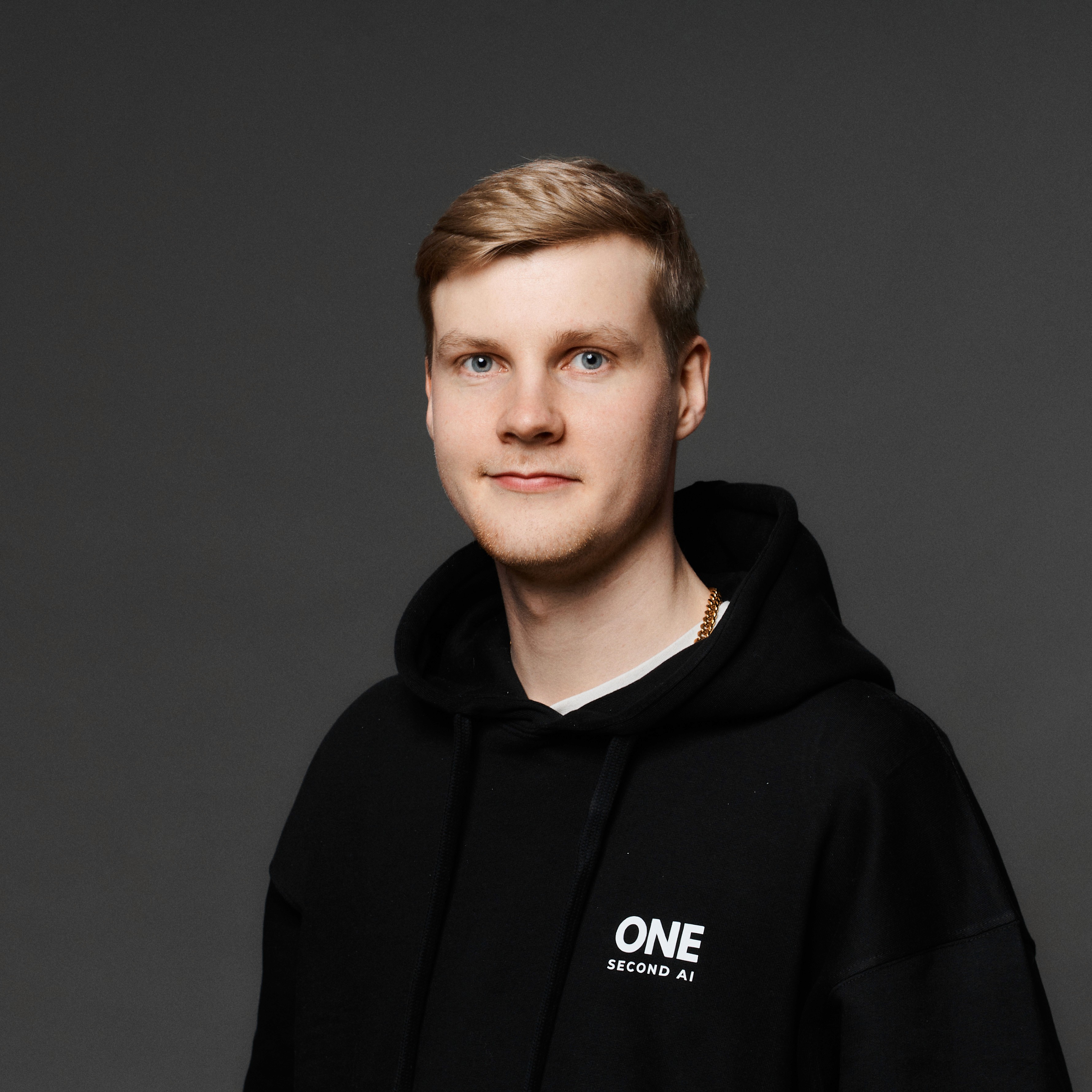
Nuutti Räisänen
Co-founder & CRO @ One Second AI
Follow me on:

Last updated
Jan 5, 2026
We Wrote the Guide We Wish Existed When We Started Building AI Agents
150+ pages. Zero fluff. Everything we've learned from 280+ production deployments, now free.
Two years ago, we started building AI agents for real businesses. Not demos. Not proofs of concept. Production systems that handle real money, real customers, and real consequences.
We made every mistake possible. We automated broken processes and scaled chaos. We built agents without owners and watched them die in organisational limbo. We skipped error budgets and learned what it costs when a single failure cascades through an entire workflow.
We also figured out what works.
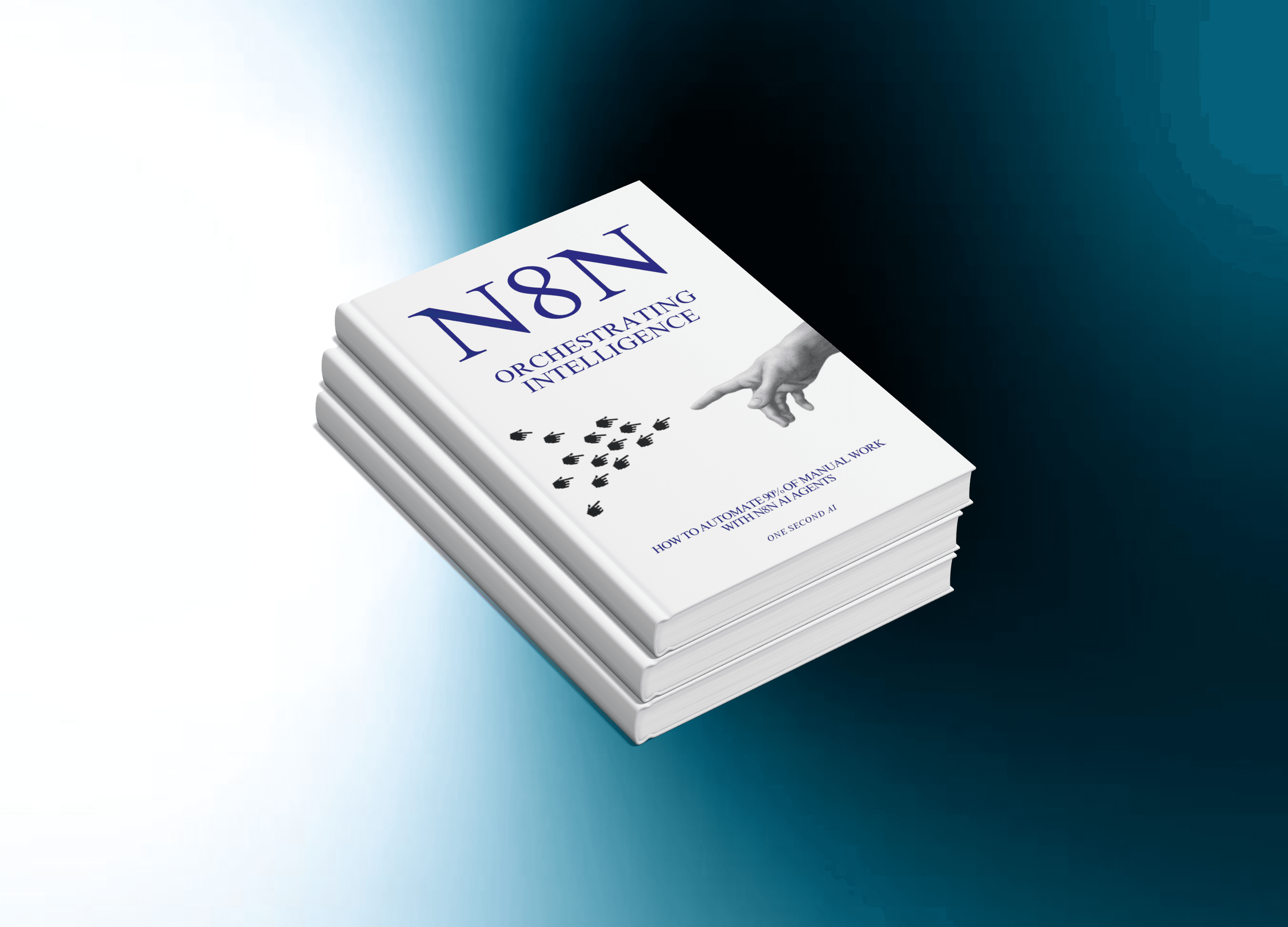
Now we've written it all down: The Complete N8N AI Agent Guide 2026, a 150+ page operational playbook covering everything from executive strategy to production hardening to ready-to-deploy agent patterns.
And we're giving it away for free.
Why We Wrote This
Most AI content falls into two categories: either it's surface-level hype ("AI will transform everything!") or it's technical documentation that assumes you already know what you're doing.
Neither helps the mid-market leader who needs to answer real questions:
Should we build this? How do I know if a process is ready for automation?
Who owns this? When the agent makes a mistake, whose problem is it?
What does it cost? Not just to build—but to run, maintain, and scale?
What breaks? Not in demos, but in production at 3am on a Sunday?
We wrote the guide that answers those questions. The guide we wish existed when we started.
What's Inside
Part 1: The Executive Agent Blueprint
For CEOs: How to set objective functions that turn technical projects into business assets. Why the real opportunity isn't efficiency, it's decision velocity.
For COOs: A go/no-go framework that kills bad projects before they waste time. The acid test that separates automatable workflows from money pits.
For CFOs: An honest ROI model that accounts for revenue acceleration, error avoidance, and capacity liberation, not just "time saved." Plus: the black swan model for quantifying catastrophic risk.
For CTOs: Non-negotiable security requirements, scalability architecture, and the vendor lock-in guarantees that protect your infrastructure investment.
Part 2: Why 70% of AI Projects Fail
We document the failure modes we've seen repeatedly across 280+ implementations:
The orphan agent: No authorised owner, so exceptions pile up with no resolution mechanism
The undefined success: "Improve customer support" isn't measurable, so you can't prove ROI
The accountability vacuum: Nobody willing to own the agent's outputs means it never gets production write access
The automated chaos: Broken processes don't get fixed by agents, they get broken faster and at greater scale
The stateless disaster: Multi-step workflows without checkpoint logic that corrupt data on partial failures
The prompt brittleness: Agents that work perfectly until the model updates and the JSON structure changes
Each failure mode comes with the specific fix that prevents it.
Part 3: Technical Considerations for N8N
The engineering section covers what production systems actually require:
Pre-build foundations: Process audits, golden path identification, success metrics, and tool access inventories
Agent architecture: The four-layer stack for clarity and control, trigger, orchestration, execution, and control layers
Workflow debugging: Step-by-step diagnostic methodology for when things break
Production hardening: Security checklists, credential management, PII masking, RBAC, webhook authentication
Scaling and governance: Workflow libraries, version control, documentation standards, and template management
Cost control: Strategic LLM token optimisation and granular execution cost tracking
Part 4: Our N8N Playbook
This is the section that would have saved us months. Ready-to-adapt patterns for common agent architectures:
Core Building Patterns:
Classification agent (attention architecture)
Research agent (insight generation)
Approval-gated agent (trust building)
Multi-tool agent (dynamic execution)
Evaluation loop (engineering improvement)
Production Examples:
Lead Engine: Real-time lead qualification system
Customer Consultation Engine: Intelligent advisory automation
UGC Automation: Autonomous video production architect
Project Feasibility Engine: Proactive risk assessment before kickoff
Virtual Board: Autonomous executive reporting
Market Analysis: Automated competitive intelligence
Meeting Tool: Commercial proposal generation from transcripts
Automatic CRM: Data integrity through autonomous sync
Report Generator: Workshop outputs to strategic deliverables
MCP Protocol: Universal interface for AI-to-system communication
RAG Agent and Pipeline: Internal documentation to queryable intelligence
Each pattern includes the workflow logic, failure handling, and the specific decisions that make it production-ready rather than demo-ready.
Part 5: The First Day Mandate
The transition from theory to operational reality. What to do tomorrow morning to start building the process moat that becomes your competitive advantage.
Who This Is For
This guide is not for everyone.
If you're looking for chatbot tutorials or content generation tricks, this isn't it. We don't cover surface-level applications of the technology.
This playbook is for:
Executives who need to decide whether AI agents are a strategic investment or an expensive distraction
Operations leaders who will own the success or failure of agent deployments
Technical leaders who need to architect systems that scale without creating security vulnerabilities
Implementation teams who will build, deploy, and maintain production agents
The guide assumes you're serious about building systems that actually work, and that you understand there's no magic involved. Just engineering, governance, and relentless error elimination.
Why Free?
Three reasons:
1. We believe in trust architecture.
The guide is built on the same principle we apply to every agent we deploy: trust is earned through transparency. If you read this guide and conclude you can build everything yourself, that's a win. You'll build better systems, and the ecosystem improves.
2. The guide creates clarity.
Most companies we talk to aren't ready for production agents, they just don't know it yet. The acid test in Chapter 1.2 saves everyone time. If you can't answer "yes" to at least five of seven questions, you need to fix your processes first. Better to know that before spending three months on a project that was doomed from the start.
3. The guide demonstrates what we actually know.
Anyone can claim expertise. This is 150+ pages of documented methodology from actual production deployments. If it's useful, you'll remember where it came from.
The Core Thesis
One idea runs through the entire guide:
Don't automate tasks. Design systems.
The difference matters. Task automation is tactical, you're making one thing faster. System design is strategic, you're building infrastructure that compounds over time.
An agent isn't a chatbot. It's a capital asset. It executes with the authority you define, learns from its errors (if you build the feedback loops), and operates at a scale no human team can match.
The companies that win in 2026 won't be the ones with the most data or the biggest headcount. They'll be the organisations that successfully shift from running processes to programming them.
This guide shows you how.
Get the Guide
The complete N8N AI Agent Guide 2026 is available now as a free download.
150+ pages covering:
Executive decision frameworks
Failure mode documentation
Technical architecture patterns
Production-ready agent playbooks
Security and governance requirements
No email wall. No drip sequence. Just the guide.
[Download: N8N Complete Guide 2026 →]
What Comes Next
The guide gives you the playbook. But there's a difference between reading a map and walking the terrain.
If you want to move faster, skip the prototype phase entirely and deploy production-grade agent infrastructure from day one, that's what we do.
We work with a limited number of teams per quarter to design and build production AI agents. Systems that run in real businesses, handle real edge cases, and improve over time.
If that's relevant:
Book a call → or reach out directly: nuutti@onesecondai.com
One Second AI builds AI revenue infrastructure for mid-market businesses. Our Symphony transformation replaces manual sales and marketing operations with autonomous agents, built on the same methodology documented in this guide.
Blog
Related articles



FAQ
Frequently asked questions

Co-founder @ One Second AI
Nuutti Räisänen
What does One Second AI actually do?
What does One Second AI actually do?
We help companies move from manual sales and marketing work to AI-first execution. That means designing the right strategy, then building and deploying autonomous AI agents that handle real workflows, like follow-ups, qualification, routing, reporting, and coordination, inside your existing systems. We don’t sell tools. We build systems that run.
Are you a software company or a consultancy?
Are you a software company or a consultancy?
Neither. and intentionally so. We work as an AI execution partner. That means we combine: - strategy - system design - hands-on implementation - continuous optimization You get working AI agents in production, not slides, prompts, or recommendations you have to implement yourself.
What kinds of companies do you work with?
What kinds of companies do you work with?
We typically work with: B2B companies Scaling teams (often €1M–€50M+ revenue) Sales & marketing teams struggling with manual work, slow pipelines, or tool sprawl Our clients usually know something needs to change, they just don’t want risky pilots or disconnected experiments.
Do we need to replace our current tools or systems?
Do we need to replace our current tools or systems?
No. Our AI agents are designed to work with your existing stack, CRM, marketing tools, communication channels, data sources, and internal processes. The goal is not replacement. The goal is orchestration and automation across what you already use.
How is this different from automation tools or AI copilots?
How is this different from automation tools or AI copilots?
Most tools: - automate individual tasks - require constant human input - don’t learn or adapt Our approach: - deploys autonomous agents, not scripts - connects multiple workflows together - operates continuously - improves based on outcomes Think less “automation” and more AI workforce.
Is this safe for our brand, data, and compliance requirements?
Is this safe for our brand, data, and compliance requirements?
Yes, governance is built in from day one. We design agents with: - brand rules - approval logic where needed - clear boundaries on actions -auditability and monitoring This isn’t experimental AI running loose. It’s controlled, production-grade deployment.
Can we start small before committing long term?
Can we start small before committing long term?
Yes, and many teams do. A common starting point is: - an AI assessment - a strategy workshop - or a focused initial deployment This allows you to validate fit and value before scaling.